









10 Fascinating Facts About the Forbidden City
Why are there no trees in the outer court? Why do the roof beasts matter? From the 9,999.5-room legend to the last emperor’s bicycle — the stories that make the Palace Museum unforgettable.
The Forbidden City is the largest palace complex on Earth — but its real magic hides in details most visitors walk straight past. Keep these ten stories in your pocket and every courtyard will come alive.
1. It was built in just 14 years — by a million workers
The Yongle Emperor of the Ming dynasty ordered construction in 1406. Around one million labourers and 100,000 artisans shaped the palace from precious nanmu wood, golden bricks from Suzhou and glazed tiles fired in imperial kilns. It was completed in 1420 and served 24 emperors of the Ming and Qing dynasties.
2. The “9,999.5 rooms” legend
Folklore says the palace holds 9,999.5 rooms — half a room short of heaven’s 10,000, because only the Jade Emperor could match that number. The real count from the modern survey: 8,700+ rooms across 980 buildings. Impressive either way.
3. No trees grow in the outer court
Notice the three great halls stand in a forest of marble, not greenery. Trees were avoided in the ceremonial heart — partly for security (no assassins hiding), partly for feng shui and sightlines that emphasise imperial power. Real gardens bloom only in the inner court, above all the Imperial Garden at the north end.
4. The roof beasts are a rank system
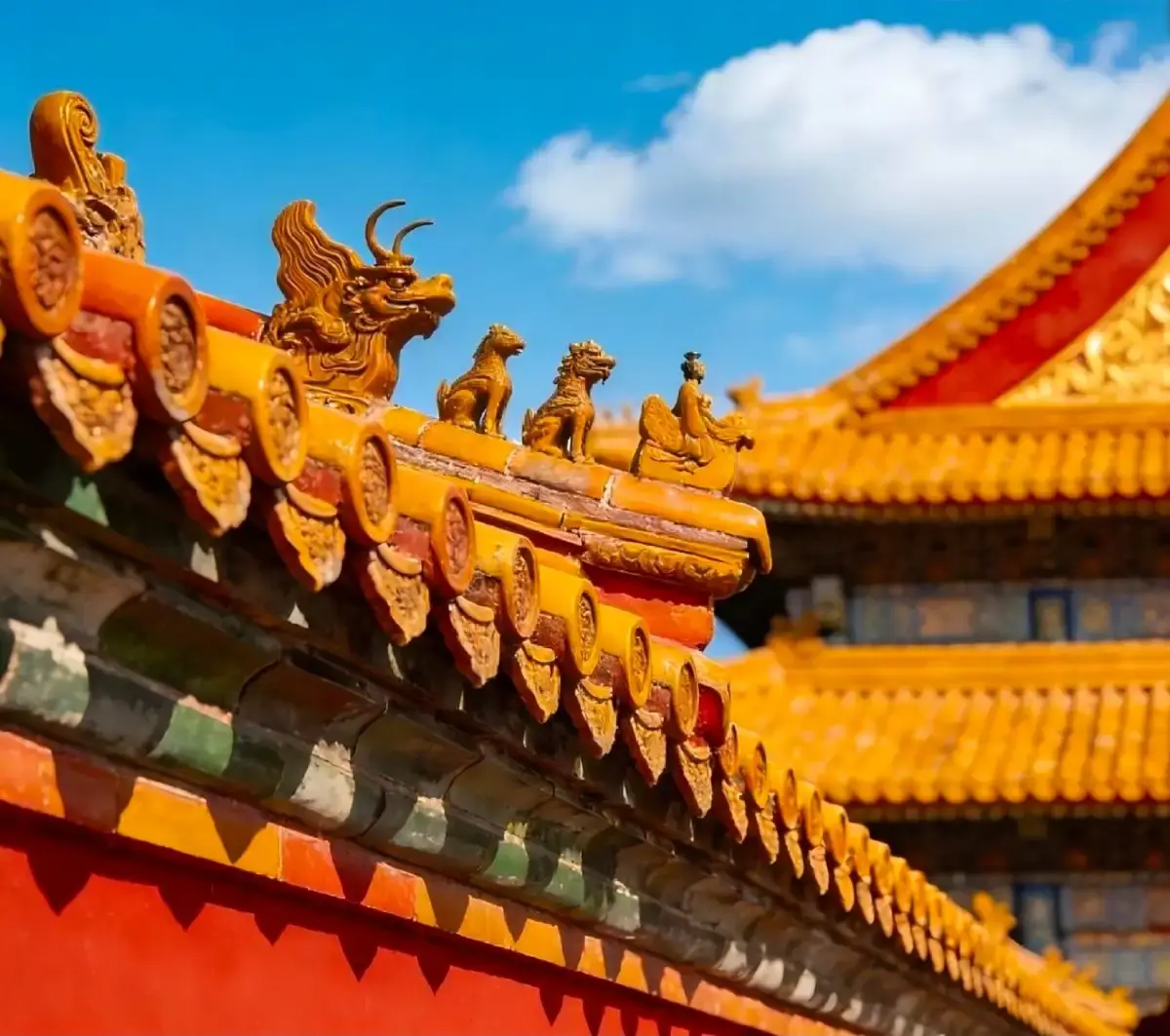
Those tiny figurines on roof ridges are not decoration — they are an imperial rank badge. The Hall of Supreme Harmony carries ten, the only building in China allowed that many. More beasts meant a more important building, which is why you can “read” the hierarchy of the whole city just by looking up.
5. Golden bricks that ring like metal
The floors of the great halls are paved with “golden bricks” fired for months in Suzhou kilns — so dense they ring when tapped and never crack in frost. Each brick took years to make, and legends say they were worth their weight in gold, hence the name.
6. The number nine rules everything
Nine is the imperial number, and the palace is full of it: 9 by 9 gilded door studs on the great gates, 81 studs per leaf, nine bays in major facades. Watch for the one exception — the Hall of Supreme Harmony’s gate, which carries an even more auspicious arrangement.
7. A clock for every occasion
The Qing emperors adored European clockwork. The Clock Exhibition displays gilded automatons, elephant-drawn carriages and musical clocks sent as gifts from London to Guangzhou — craftsmen rebuilt them inside the palace so they still perform today.
8. The last emperor rode a bicycle across the courtyards
Puyi, the final emperor, abdicated in 1912 but lived inside until 1924. He famously had the thresholds of some gates sawn off so he could ride his bicycle through — and his English tutor, Reginald Johnston, taught him from a throne-room study. Their story inspired the Oscar-winning film The Last Emperor, shot on location here.
9. It became a museum almost exactly 100 years ago
The Palace Museum opened its doors to the public on 10 October 1925 — turning an emperor’s private world into the people’s museum. Its collection of 1.86 million artifacts is one of the richest on Earth, and UNESCO listed the palace as a World Heritage Site in 1987.
10. It is the most visited museum in the world
Every year the Palace Museum welcomes up to 19 million visitors — more than the Louvre — while capping daily entries at 80,000 to protect the buildings. With numbers like that, booking ahead is not optional. Reserve your timed-entry ticket on Trip.com and see all ten facts with your own eyes.
Keep reading
Best Time to Visit the Forbidden City: A Season-by-Season Guide
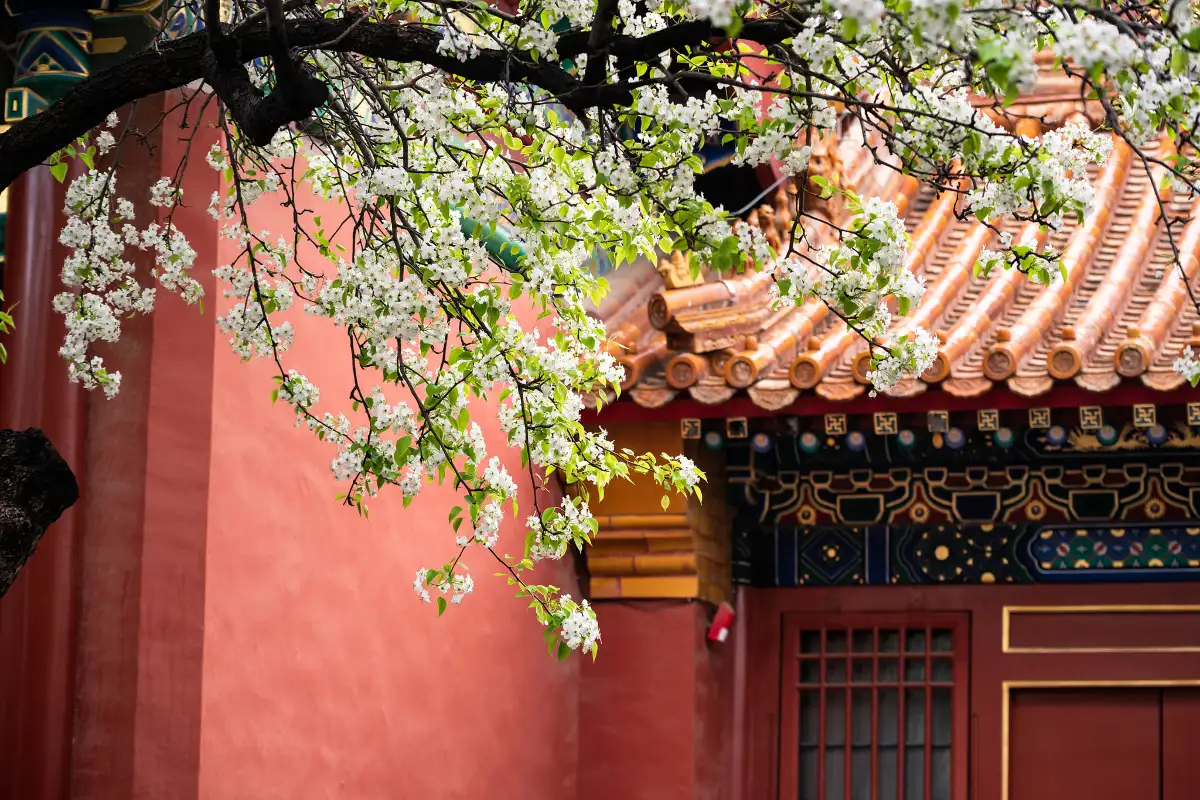
Snow-dusted roofs in January, peach blossoms in April, golden ginkgo in November — the Palace Museum changes i…
Read guide
Forbidden City Tickets 2026: Prices, Booking Rules & How to Skip the Line
The Palace Museum sells no tickets at the gate — everything is booked in advance under your passport. Here are…
Read guide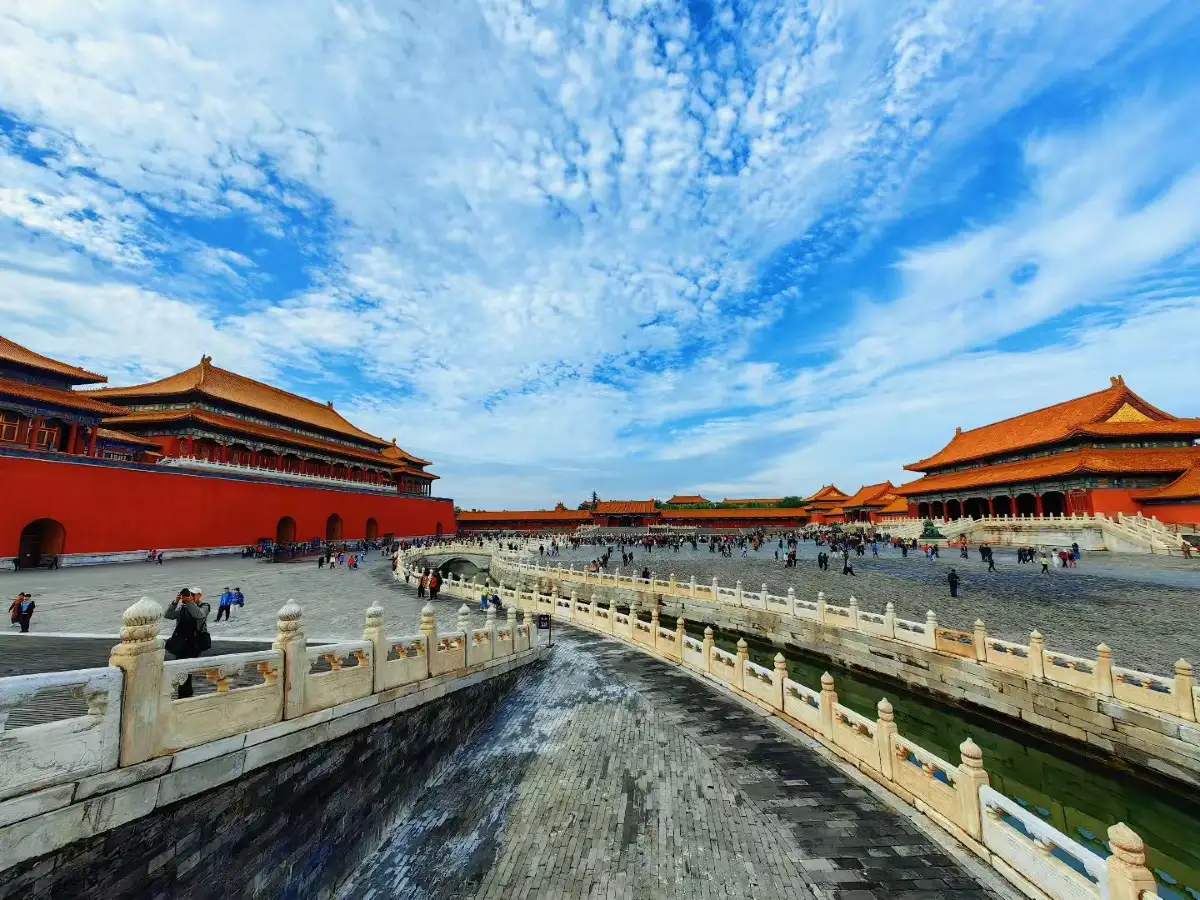
Perfect Routes Through the Palace: 2 Hours, Half Day or Full Day
The Forbidden City is a 961-metre-long city of nearly 9,000 rooms. Whether you have two hours or a whole day,…
Read guide